
There are cities you visit, and then there are cities that visit you long after you’ve returned home. Marrakech is firmly in the second category. From the hypnotic chaos of its ancient squares to the snow-capped silence of the Atlas Mountains rising behind the rooftops, Morocco’s Red City has a way of burrowing under your skin and staying there.
Whether you’re arriving for the first time or returning for the fifth, here’s everything you need to know to make the most of your time in one of Africa’s most extraordinary destinations.
Table of Contents
A City Like No Other
Marrakech occupies a unique position in Morocco literally and figuratively. As the country’s second largest city and the undisputed commercial heart of the south, it functions as both a thriving modern hub and a living museum of Moroccan heritage.
Unlike other imperial cities, Marrakech doesn’t rely on grand historical monuments to make its impression. Its power is subtler and more enduring: it lives in the texture of the streets, the warmth of its people, and the dramatic natural setting that frames the entire city. Look south and you’re in the desert. Look up, and the jagged white peaks of the Atlas Mountains dominate the skyline like a postcard that never gets old.
The Marrakchis themselves known throughout Morocco for their sharp humor, open-hearted hospitality, and refreshing directness are as much a part of the city’s character as any landmark.
The Heart of It All: Djemaa el Fna
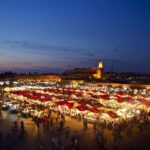
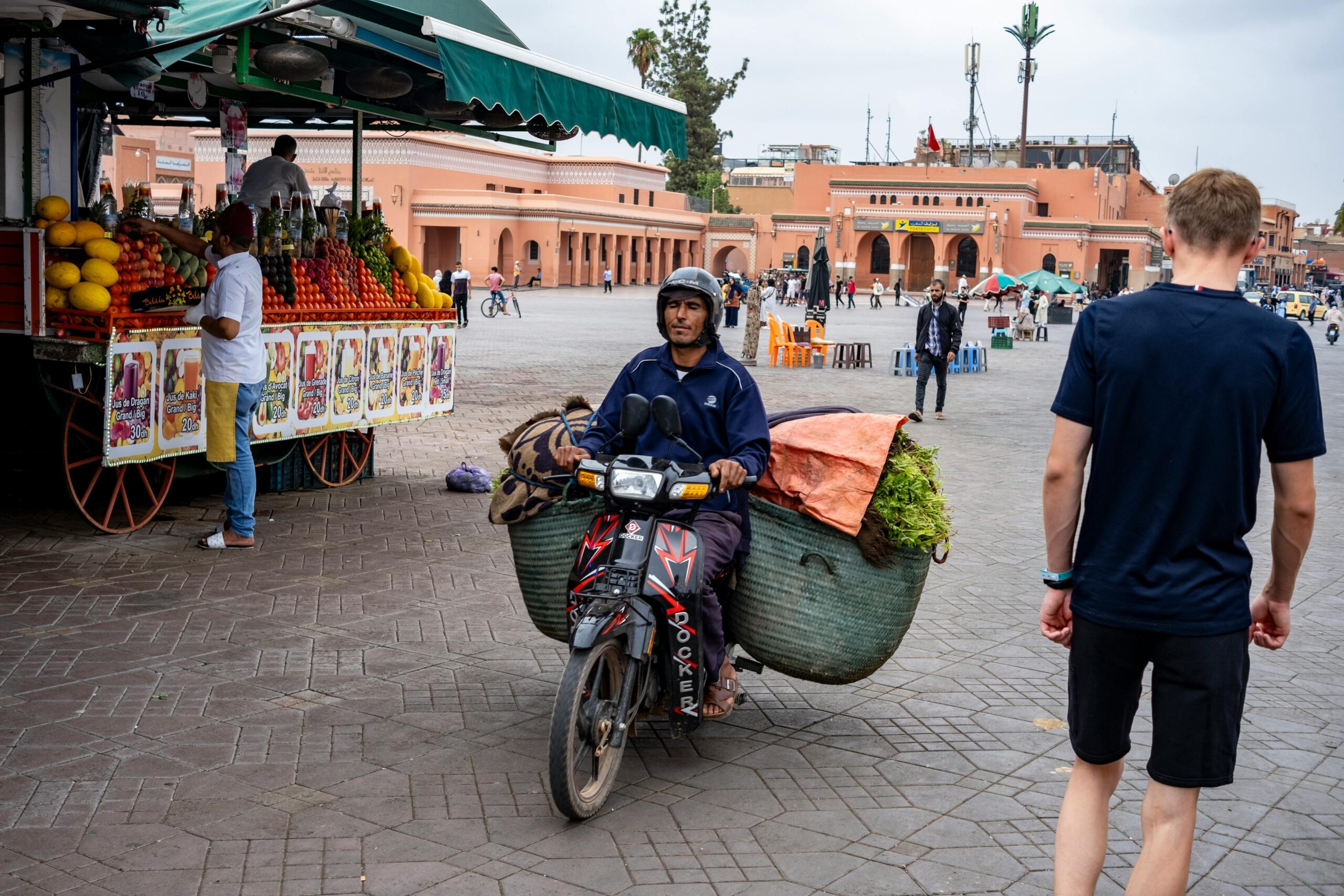
If Marrakech has a soul, it beats loudest in Djemaa el Fna, the extraordinary square at the center of the medina. This UNESCO-recognized cultural space is unlike any public gathering place you’ve encountered before.
By day, the square belongs to juice sellers, henna artists, and wandering musicians. Come evening, it transforms into something altogether more theatrical. Acrobats tumble, storytellers draw crowds, drummers build rhythms that seem to come from somewhere older than memory, and the air thickens with the smoke of a hundred food stalls. Snake charmers coil their performers around their shoulders. Comedians work audiences without a shared language between them.
And when the performance overwhelms you as it inevitably will retreat to one of the rooftop cafés above the square, order a pot of mint tea, and watch the whole spectacle from above. It never gets old.
Where to Stay
Marrakech accommodates every budget without compromise on character. The city’s lodging options span an impressively wide spectrum.
Inside the Medina, you’ll find the greatest concentration of budget-friendly guesthouses and mid-range hotels, many of them tucked inside traditional riads those magical courtyard houses that hide entire worlds behind their plain exterior walls. Staying in a riad is one of the defining Marrakech experiences: the tiled fountains, the mosaic floors, the rooftop breakfasts, the complete quiet in the middle of a noisy city.
For those seeking modern luxury, the neighborhoods of Hivernage and Semlalia deliver it in abundance, with five-star properties featuring world-class pools, spa facilities, and interior design that blends Moroccan craftsmanship with contemporary elegance.
One practical word of warning: Marrakech fills up fast. Book your accommodation well ahead of time, particularly around Christmas, Easter, and New Year’s, when even the most obscure guesthouses reach full capacity weeks in advance. If hotels aren’t your style, the city also offers a strong selection of private villas, studio apartments, and self-catering rentals across all price points.
Exploring the City: What to See and Do
You don’t need to hire a guide to navigate Marrakech — good maps are plentiful, and getting slightly lost in the medina is half the experience. The labyrinthine alleys have a way of rewarding wanderers with unexpected discoveries: a weaver at his loom, a doorway opening onto an ornate courtyard, a hidden café that seems to exist outside of time.
The Souks
The souks of Marrakech are legendary for a reason. Organized by trade in the traditional fashion, each section of the market is dedicated to a specific craft leatherworkers in one quarter, spice merchants in another, metalworkers in a third, dyers somewhere beyond that. Walking through them is an education in Moroccan artisanship, and watching skilled craftspeople work using techniques passed down through generations is something no museum can replicate.
The best times to visit are early morning or late afternoon, when vendors auction off goods to local buyers and the energy reaches its peak. Bargaining is expected and part of the cultural fabric — approach it as a conversation rather than a confrontation, and you’ll enjoy it far more.
The Marrakech Museum
For those seeking a more contemplative experience, the Marrakech Museum is worth an afternoon. Housed in a beautifully restored palace, it displays a thoughtful collection of Moroccan art and sculpture spanning both traditional and contemporary periods. There’s also a small bookshop and café in the entrance courtyard an ideal spot to sit and decompress after the sensory intensity of the souks.
The Gardens
When the summer heat becomes genuinely formidable and in Marrakech, it will the city’s gardens offer the perfect escape. With shaded pathways, vast reflecting pools, and a hushed, unhurried atmosphere, they invite exactly the kind of slow afternoon that the best travel memories are made of.
Food and Drink
Eating in Marrakech is one of life’s genuine pleasures. The city’s dining scene spans everything from street-food perfection to elaborate palace dinners, and both ends of the spectrum are worth exploring.
The Djemaa el Fna food stalls are an experience in themselves: rows of open-air kitchens serving grilled meats, fresh seafood, steaming soups, and Moroccan staples to crowds of locals and travelers eating side by side. It’s noisy, atmospheric, and absolutely delicious.
Beyond the square, the Medina holds most of the city’s French-style cafés, neighbourhood bistros, and family-run restaurants where the cooking is honest and the prices are kind. At the other end of the scale, Marrakech’s palace restaurants offer a more theatrical version of Moroccan hospitality multi-course traditional meals served in grand courtyard settings with live music and elaborate decor.
Whatever your budget, make sure your Marrakech experience includes a proper Moroccan tagine, a bowl of harira soup, a pastilla if you can find one, and at least one glass of fresh-squeezed orange juice from a street cart. These are non-negotiables.
Getting Around
By Air
Marrakech Menara Airport sits just 4 km from the city center and connects the city to major European hubs including London, Paris, Amsterdam, Madrid, and Geneva, as well as domestic routes to Casablanca and Agadir. Getting into the city from the airport is straightforward and inexpensive.
By Train
For travel between Morocco’s major cities, the train network is a reliable and comfortable choice. From Marrakech, trains run twice daily to both Casablanca and Rabat — a scenic and relaxed way to see the country.
By Bus
Long-distance buses depart from the main terminal at Bab Doukkala. The CTM company offers reliable intercity services to popular destinations including Fez, El Jadida, Zagora, and Taroudannt. For busy routes, buying your ticket at least a day in advance is strongly recommended.
By Grand Taxi
For shorter journeys or point-to-point trips within the region, grand taxis the larger shared taxis that operate throughout Morocco offer a good balance of flexibility and value. They’re a reliable and affordable option for getting between towns and villages that buses don’t serve directly.
Marrakech rewards those who slow down. The city reveals itself gradually through an unexpected invitation for tea, a sound heard from behind a closed door, a spice market encountered by chance in an alley you weren’t supposed to find. Come with open eyes, comfortable shoes, and a willingness to be surprised. The Red City will take care of the rest.