
Table of Contents
Merzouga Morocco travel guide Rising seamlessly out of the flat desert plains, the towering golden sands of the Sahara welcome travelers to one of Morocco’s most magical landscapes. Merzouga is a small, vibrant desert village that functions as the ultimate portal to the magnificent Erg Chebbi dune field.
Unlike the bustling imperial medinas of Marrakech or Fes, Merzouga offers an escape into profound tranquility, sweeping desert vistas, and rich nomadic traditions. For first-time visitors, it represents the quintessential Moroccan desert dream—where days end with blazing sunsets over rolling dunes and nights unfold under a blanket of brilliant stars.
2. Where is Merzouga Morocco travel guide ?
Merzouga is located in southeastern Morocco , nestled in the Errachidia Province within the Drâa-Tafilalet region. It sits approximately 35 kilometers southeast of the historic market town of Rissani and about 50 kilometers from the Algerian border. Because it sits at the literal “end of the road,” any journey here requires dedicated travel time, making it an immersive stop rather than a casual day trip.
3. Why Visit Merzouga?
Merzouga is worth visiting because it provides rare, unfiltered access to the grandeur of the Sahara Desert. The Erg Chebbi dunes stretch over 28 kilometers north-to-south and rise up to 150 meters high, shifting colors from deep ocher to striking amber and rose as the sun moves across the sky. Beyond the landscape, the region is steeped in Amazigh (Berber) culture, historic caravan roots, and unique desert ecosystems that feel entirely disconnected from the rest of the country.
4. Best Things to Do in Merzouga
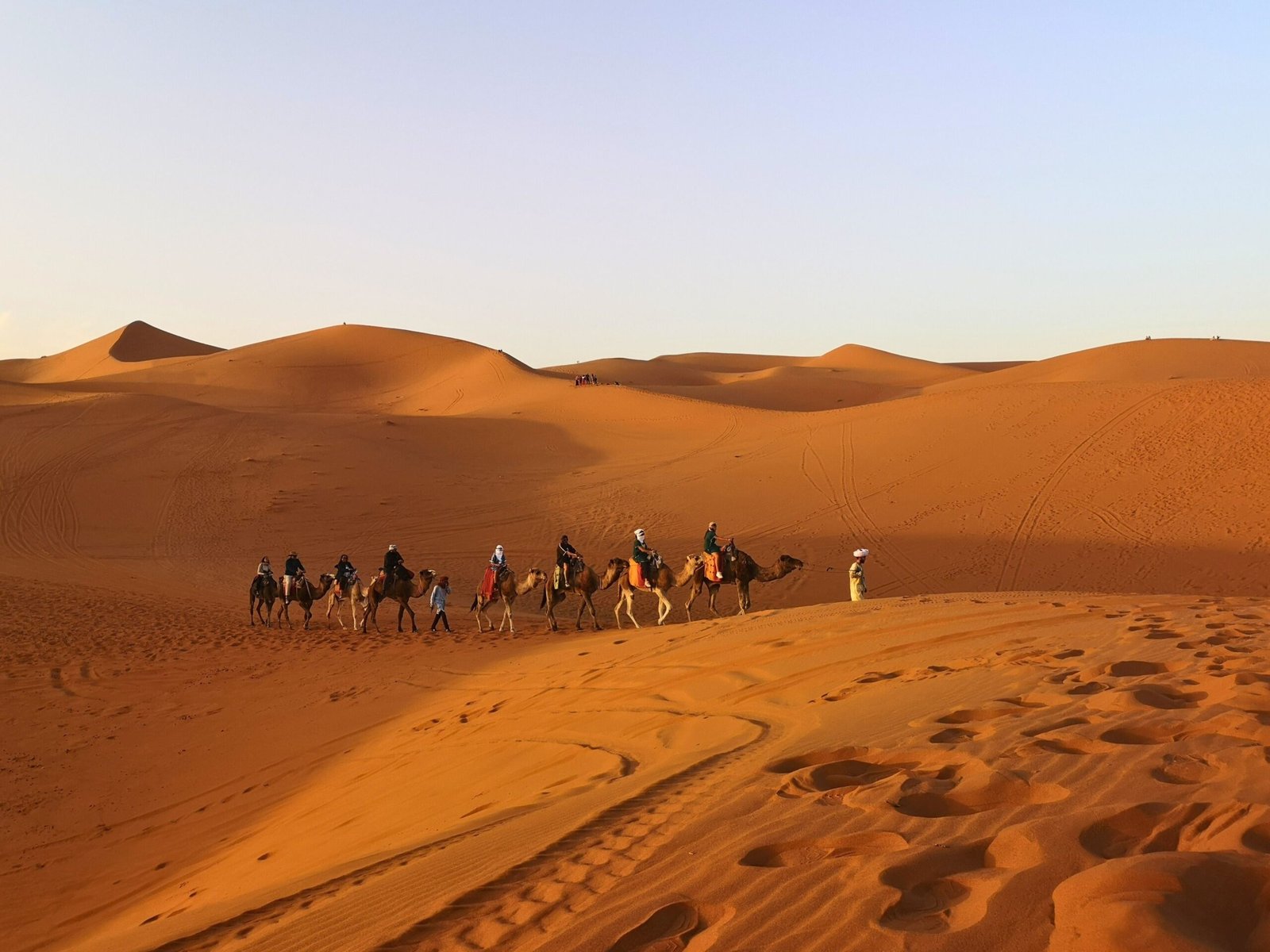
- Take an Overnight Camel Trek: Traverse the rippling dunes on camelback just before dusk, heading deep into the desert to spend a night at a traditional Berber bivouac camp. Enjoy a tagine dinner around a campfire accompanied by traditional drum music.
- Watch the Sunrise and Sunset: Climb to the ridge of a nearby dune to watch the light transform the desert landscape. Sunrise is particularly peaceful, offering crisp morning air and pristine, wind-swept sand patterns.
- Go Sandboarding: Rent a sandboard from a local shop or your desert camp and glide down the steep slopes of the Erg Chebbi dunes.
- Explore Khamlia Village: Visit the nearby village of Khamlia, home to descendants of formerly enslaved sub-Saharan Africans, where you can listen to soul-stirring traditional Gnawa music.
- Discover Desert Wildlife and Seasonal Lakes: Depending on recent rainfall, keep an eye out for Dayet Srji—a seasonal salt lake near Merzouga that occasionally attracts migratory birds such as flamingos and desert warblers.
5. What to See Near Merzouga
To enrich your desert journey, consider combining Merzouga with these nearby stops:
- Rissani: Located about 35 km away, this bustling traditional town features a vibrant local souk, historic trading roots, and a famous “donkey parking lot” market.
- Erfoud: Known as the “Gateway to the Sahara” and famous for its fossil quarries and workshops where ancient marine fossils are polished into unique furniture and home decor.
- Todra and Dades Gorges: Dramatic canyon systems located along the classic route between Marrakech/Ouarzazate and the desert, perfect for dramatic day hikes.
6. How to Get to Merzouga
Because Merzouga is located in the deep southeast, getting there takes planning:
- By Bus: The overnight Supratours bus runs directly from Fes (approx. 7–8 hours) and Marrakech (approx. 11–12 hours, with daytime options or connections) straight to Merzouga.
- By Private Car or Guided Tour: Many travelers choose a multi-day private or small-group desert tour departing from Marrakech or Fes, allowing for scenic stops through the Atlas Mountains and Todra Gorge along the way.
- Driving Independently: Renting a car gives you maximum flexibility, though the mountain passes require careful driving. The roads leading directly to Merzouga are paved and well-maintained.
7. Best Time to Visit Merzouga
- Spring (March to May) & Autumn (September to November): These shoulder months offer the most comfortable daytime temperatures (15°C to 25°C), making outdoor exploration ideal.
- Winter (December to February): Days are generally clear and pleasant, but nights get very cold — temperatures can drop near or below freezing in the desert camps, so warm layers are essential.
- Summer (June to August): Extreme heat sets in, with daytime temperatures often exceeding 40°C to 45°C. Traveling during mid-summer is discouraged unless strictly managed with air-conditioned transport and indoor shelter.
8. Where to Stay
Accommodation in and around Merzouga ranges from rustic kasbah-style desert hotels right on the edge of the dunes to luxury glamping tents equipped with real beds and private bathrooms. Staying right on the fringe of Erg Chebbi allows you to step straight from a swimming pool terrace into the open sand.
9. Food and Local Experiences
Dining in the desert centers around classic Moroccan hospitality. Expect slow-cooked chicken or beef tagines spiced with cumin and ginger, fluffy couscous piled high with seasonal vegetables, and steaming glasses of sweet Moroccan mint tea. Do not miss trying Medfouna (often called Berber pizza)—a stuffed flatbread baked over hot sand and coals, packed with spiced minced meat, onions, herbs, and hard-boiled eggs.
10. How Long Should You Stay?
- Minimum Recommendation: 2 nights / 3 days.
- While some rushed itineraries attempt a single overnight whistle-stop, spending two nights allows you to experience one night deep in a desert tent camp and a second night in a comfortable dune-side lodge. This gives you a full day to explore Khamlia, relax, or take a 4×4 desert excursion without spending your entire schedule inside a vehicle.
11. Is Merzouga Worth Visiting?
If you want to experience the authentic silence, scale, and culture of the Sahara Desert, Merzouga is entirely worth the journey. While the drive from Morocco’s major cultural hubs is long, the reward is a landscape unlike anything else in North Africa. It is ideal for adventure seekers, couples, and culture enthusiasts alike—provided you are prepared for the remote setting and variable desert climates.